Emotional Intelligence for Kids: A Beginner's Guide to Raising an Aware Child
This practical guide provides a step-by-step framework for teaching emotional intelligence for kids, helping you raise a more resilient, empathetic, and self-aware human being.
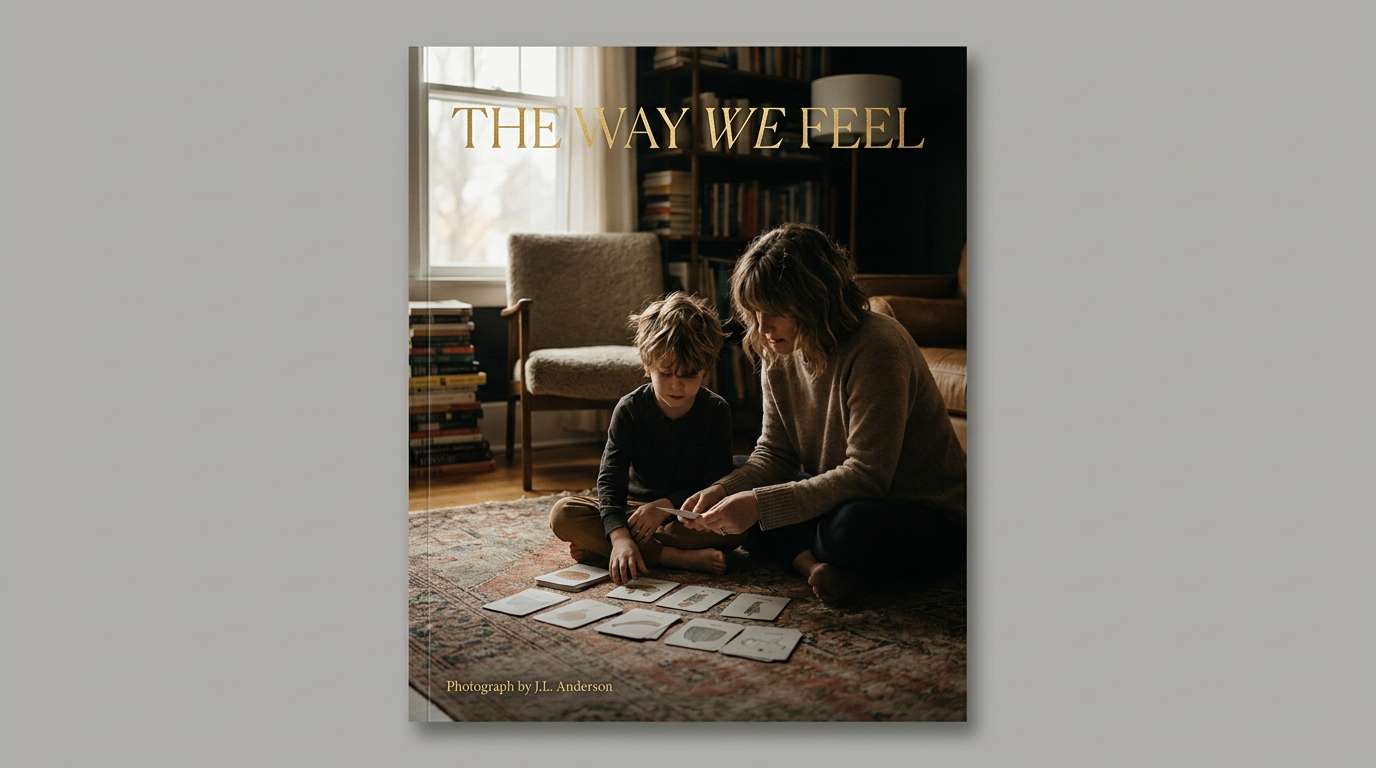
For generations, the parenting playbook focused heavily on behavior and academic achievement. We aimed for well-behaved kids who got good grades. But a quiet and profound shift is underway in how we think about raising successful humans. We're realizing that the ability to navigate one's inner world is just as critical as navigating the external one. This is where the focus on **emotional intelligence for kids** comes in, a term that has moved from psychology journals to playground conversations. It's the foundation of resilience, empathy, and self-awareness.
If you're feeling a little behind, you're not alone. The concept of teaching emotions can feel abstract and overwhelming. Where do you even start? Unlike math or reading, there isn’t always a clear curriculum. The good news is that you don't need a degree in child psychology to make a huge difference. You are already your child's primary emotional coach.
This guide is designed for beginners. We'll demystify emotional intelligence, break it down into manageable parts, and give you concrete, evidence-led strategies you can start using today. Think of it not as another thing to add to your to-do list, but as a new lens through which to view the interactions you're already having with your child.
§What Is Emotional Intelligence for a Child, Exactly?
Before we can teach it, we need to understand what it is. The term was popularized by psychologist and author Daniel Goleman, but the core ideas have roots in decades of research. At its heart, emotional intelligence isn't about being 'nice' all the time or suppressing emotions. It's about being smart *with* your emotions.
Dr. Marc Brackett of the Yale Center for Emotional Intelligence offers a helpful framework called RULER, which breaks EQ down into five teachable skills: Recognizing, Understanding, Labeling, Expressing, and Regulating emotions. For a child, this might look like: noticing their stomach feels fluttery before a test (Recognizing), knowing it's because they're anxious (Understanding), being able to say, "I feel nervous" (Labeling), choosing to tell a parent about it (Expressing), and then taking a few deep breaths to calm down (Regulating). This is a superpower in a complex world.
“If your emotional abilities aren't in hand, if you don't have self-awareness, if you are not able to manage your distressing emotions, if you can't have empathy and have effective relationships, then no matter how smart you are, you are not going to get very far.”
§How to Teach Kids Emotions: Building the Foundation
The first and most fundamental step is to give your child a language for their inner experience. You can't manage what you can't name. Most young children operate with a very limited emotional vocabulary: happy, sad, mad. Our job is to expand that dictionary, providing the 'feeling words for kids' that allow for more precise and helpful expression.
This process starts with simple narration. When your toddler is stomping their feet because they can't have a cookie, you can say, "You seem so frustrated right now. It's disappointing when you can't have what you want." You aren't condoning the stomping, but you are giving a name to the big feeling driving it. This practice, often called 'Name It to Tame It' by Dr. Dan Siegel, helps integrate the emotional and thinking parts of the brain.
| Age Group | Core Feelings to Introduce | Example Activity |
|---|---|---|
| Toddler (2-3) | Happy, sad, mad, scared, surprised | Point out facial expressions in picture books. 'Look, the bear looks surprised!' |
| Preschool (4-5) | Frustrated, excited, worried, shy, proud | Use a 'feelings wheel' with faces. Ask, 'Which face shows how you feel today?' |
| Early Elementary (6-8) | Disappointed, lonely, grateful, embarrassed, confident | Ask about characters in movies. 'How do you think they felt when that happened?' |
| Pre-teen (9-12) | Anxious, relieved, overwhelmed, optimistic, resentful | Discuss their own social situations. 'That sounds really awkward. Were you feeling embarrassed?' |
§What Are Practical Strategies for Emotional Regulation for Children?
Once a child can identify their feelings, the next step is learning what to do with them. Emotional regulation for children is not about suppression; it's about managing the intensity and duration of emotional responses so they aren't completely overwhelming. This is a skill that even many adults are still working on.
One of the most effective ways to teach this is to co-regulate with your child when they are upset. Instead of sending them away for a timeout in anger, you might sit with them and say, "Wow, that's a big feeling. Let's take three deep dragon breaths together." By modeling a calming strategy in the heat of the moment, you are lending them your calm and wiring their brain for self-soothing in the future.
Creating a 'Calm-Down Corner' or 'Peace Corner' can also be a powerful tool. This isn't a punishment space, but a cozy, inviting area where a child can choose to go when they feel overwhelmed. Stock it with calming items like a soft blanket, a stuffed animal to hug, some paper and crayons for drawing feelings, or a pinwheel for focused breathing. This teaches them to proactively seek strategies for managing their emotional state.
§Your Action Plan: Where to Start This Week
Reading about emotional intelligence is one thing; putting it into practice is another. The goal is progress, not perfection. Here is a simple, three-step action plan to begin incorporating these ideas into your family life this week. These social emotional learning activities at home don't require special equipment, just intentionality.
Getting Started with Emotional Intelligence at Home
- 1
Become a Feelings Detective
Your only job this week is to notice and name emotions — in yourself, your child, and even characters in books or shows. Use the phrase, 'I notice you seem...' or 'It looks like you're feeling...'. Don't try to fix anything, just observe and label. This builds the habit of emotional awareness for everyone.
- 2
Practice One Calming Strategy Together
Choose one simple regulation technique to practice *when everyone is calm*. It could be 'box breathing' (inhale for 4, hold for 4, exhale for 4, hold for 4) or 'pizza breaths' (breathe in like you're smelling hot pizza, breathe out like you're cooling it down). Practice it at bedtime so it becomes a familiar tool when things get heated.
- 3
Model Your Own Emotions
Once this week, share one of your own mild, manageable feelings. For example, at dinner, say, 'I felt a little frustrated in traffic today, so I took a deep breath.' This shows your child that all people have feelings, and it models a healthy way to process them without drama or alarm.
§Frequently asked questions
At what age can you start teaching emotional intelligence?+
What is the difference between EQ and IQ?+
How can I build resilience in my child?+
What if my parenting partner isn't on board?+
Are there good books for teaching kids emotions?+
What are some simple social emotional learning activities at home?+
Sources & further reading
- Emotional Intelligence: Why It Can Matter More Than IQ — Daniel Goleman (1995)
- Permission to Feel: Unlocking the Power of Emotions to Help Our Kids, Ourselves, and Our Society Thrive — Marc Brackett, Ph.D. (2019)
- The Relation Between Emotional Intelligence and Academic Achievement: A Meta-Analysis — Journal of Educational Psychology (2020)
- CASEL Program Guide: Effective Social and Emotional Learning Programs — Collaborative for Academic, Social, and Emotional Learning (CASEL) (2021)
- The Whole-Brain Child: 12 Revolutionary Strategies to Nurture Your Child's Developing Mind — Daniel J. Siegel and Tina Payne Bryson (2011)
- Social and Emotional Learning Is Essential to Lifelong Success — OECD (2023)
Featured Guides

How to Build a Strong Local Support Network After Moving to a New City
7 min read

7 Micro-Adventure Ideas for Busy Professionals to Break Routine and Reclaim Their Week
10 min read

Maya Hari's Quiet Confidence: Lessons from a Tech Leader's Rise
9 min read

Pomodoro vs Flow State: Structured Focus or Seamless Immersion?
9 min read