Spiritual Growth Without Dogma: Your Guide to a Meaningful Inner Life
Achieving spiritual growth without dogma involves using contemplative practices and psychological insights to cultivate awe, purpose, and connection, independent of traditional religious structures.
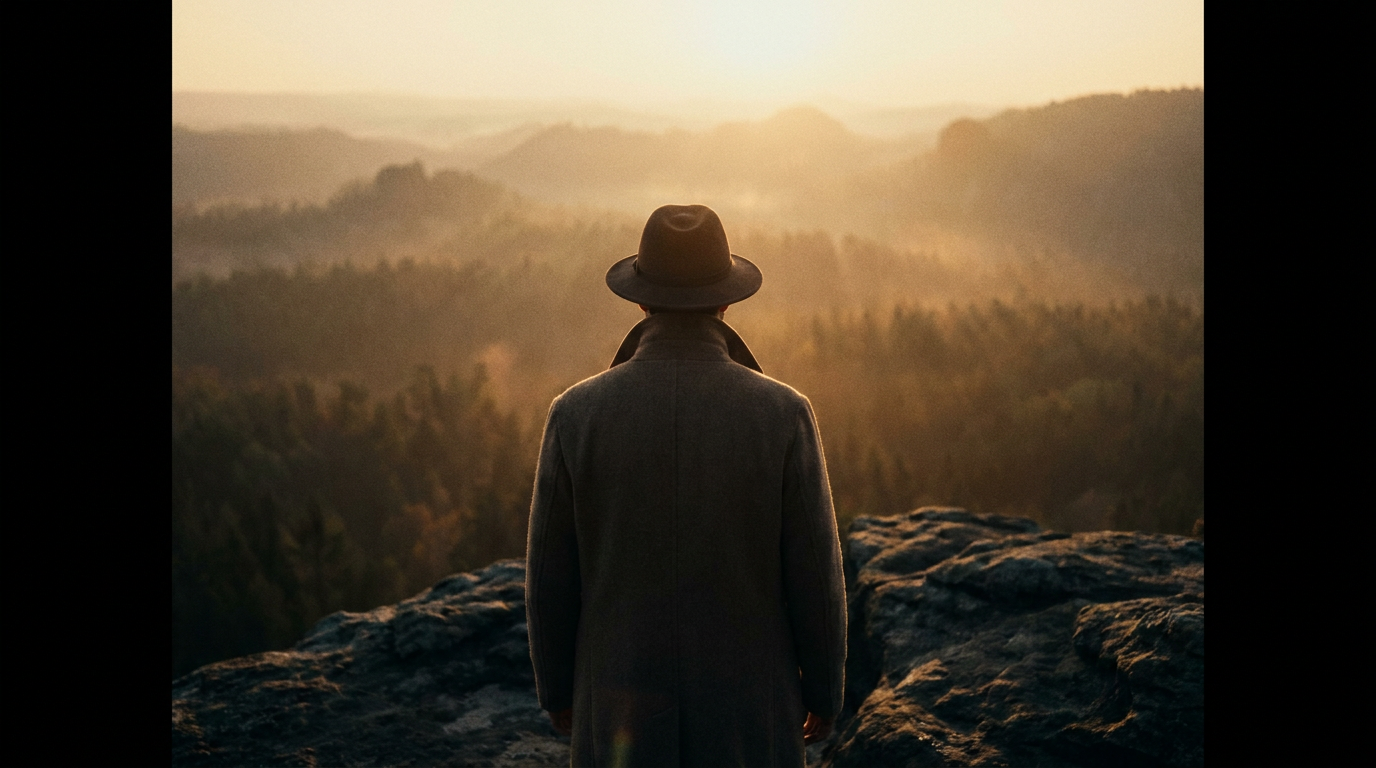
A quiet shift is happening. For a growing number of us, the old maps for navigating our inner worlds no longer feel right. The pull toward meaning, purpose, and a sense of connection remains potent, but the institutions that once held a monopoly on spirituality are losing their grip. This has given rise to a vibrant, if sometimes confusing, landscape of personal exploration—what we might call **spiritual growth without dogma**. It’s a path for the “spiritual but not religious,” the skeptics, the agnostics, and anyone who feels a deep need for an inner life without an obligation to a creed.
But what does this path actually look like in practice? It's easy to dismiss it as a vague, 'do-what-feels-good' affair. The reality is far more rigorous and rewarding. It's about swapping blind faith for conscious inquiry, and doctrine for psychological insight. It means engaging in contemplative practices not because you've been told to, but because you've seen the evidence—both in scientific studies and in the laboratory of your own experience—that they can lead to a more examined, compassionate, and meaningful life.
This guide is for those seeking that path. We won't offer you ten easy steps to enlightenment or any cosmic certainties. Instead, we'll offer a framework grounded in psychology, neuroscience, and contemplative tradition, designed to help you build your own robust, personal, and dogma-free spiritual practice. This is about doing the inner work necessary to live with more awareness, wonder, and integrity in a complex world.
§What Does Secular Spiritual Growth Actually Involve?
At its heart, secular spiritual growth involves intentionally cultivating the parts of ourselves that connect us to the universal human experience. Where traditional religions might use prayer to connect with the divine, a secular approach might use meditation to connect with the nature of one's own consciousness. The language changes, but the underlying human impulse for self-transcendence—to feel part of something larger than our individual ego—remains the same.
This isn't about rejecting spirituality; it's about re-framing it. It means finding the sacred in the mundane: in the quiet focus of a craft, the profound connection of a deep conversation, or the humbling vastness of a starry night. The core activities often include contemplative practices (like mindfulness, journaling, or spending time in nature), psychological inquiry (like therapy or shadow work), and ethical commitments (like service to others or striving for personal integrity). The goal isn't salvation in an afterlife, but a deeper, more meaningful existence right here and now.
§How Can I Cultivate Awe and Wonder in Daily Life?
Awe is a cornerstone of secular spirituality. Defined by psychologists like Dacher Keltner at UC Berkeley as the feeling of being in the presence of something vast that transcends your current understanding of the world, awe has a powerful effect on our psyche. Studies show it can decrease our sense of self-importance (the 'small self' effect), increase generosity, and improve overall well-being. Critically, you don't need a trip to the Grand Canyon to experience it.
The key is shifting from a passive consumer of your environment to an active seeker of wonder. This means paying attention. It means consciously looking for what Keltner calls 'everyday awe'—the intricate patterns in a leaf, the complex flavor profile of your morning coffee, the mind-boggling reality of the smartphone in your hand, or the resilience of a loved one. The more you look for it, the more you find it. This practice re-enchants the world, transforming daily life from a series of tasks to a source of continuous discovery.
How to Start an 'Awe Walk'
- 1
Set an Intention
Before you head out, dedicate 15-20 minutes specifically to this practice. The goal is not exercise or getting somewhere, but to actively look for things that surprise, delight, or humble you. Put your phone on silent and leave the headphones at home.
- 2
Lead with Curiosity
Walk at a slower pace than usual. Let your attention be pulled by whatever seems interesting. Instead of naming things ('that's a tree'), ask questions ('I wonder how old that tree is?' or 'Look at the texture of that bark').
- 3
Zoom In and Zoom Out
Alternate your perspective. Spend a minute looking closely at the details of a flower or an insect. Then, look up at the vastness of the sky or the scale of the buildings around you. This shift in perspective is a powerful awe trigger.
- 4
Reflect Briefly Afterwards
After your walk, take just one minute to write down three things that caught your attention or gave you a feeling of wonder. This reinforces the neural pathways associated with awe, making it easier to access that feeling in the future.
§What Psychological Frameworks Support Non-Religious Spirituality?
Many of the pathways for spiritual growth without dogma have deep roots in psychology. Long before 'spiritual but not religious' was a common phrase, pioneers of psychology recognized a fundamental human drive for meaning that transcended both biology and organized religion. These frameworks provide a secure, non-dogmatic container for deep inner exploration.
The work of Carl Jung is a foundational pillar. His concepts of 'individuation'—the lifelong process of becoming the most complete, authentic version of oneself—is a spiritual journey in psychological language. This involves engaging with the 'shadow,' the parts of ourselves we repress or deny, and integrating them into a more whole personality. Similarly, Abraham Maslow, famous for his hierarchy of needs, spent his later years studying what he called 'self-transcendence,' which he placed above self-actualization as the highest human motivation. For Maslow, this involved dedicating oneself to a cause, a calling, or the welfare of others.
“We've learned that the psyche has a spiritual dimension that needs to be nurtured. When we ignore it, we see a rise in what we call 'diseases of meaninglessness'—apathy, cynicism, chronic anxiety. Inner work isn't a luxury; it's a form of psychological hygiene in the modern world.”
Modern therapeutic modalities also offer powerful tools. Internal Family Systems (IFS) provides a way to understand our internal 'parts' with compassion, much like a contemplative would observe their thoughts without judgment. Somatic experiencing helps us process trauma and emotion stored in the body, a physical path to the kind of integration that spiritual traditions have always talked about. These are not replacements for spirituality, but rather contemporary, evidence-informed methods for undertaking the same fundamental journey.
§How Do Traditional Spiritual Practices Compare to Secular Ones?
Many secular practices are adaptations of traditional religious ones. The wisdom embedded in ancient traditions is immense, and a secular approach doesn't throw the baby out with the bathwater. Instead, it carefully extracts the practice from its theological container, examining its psychological and neurological effects.
The key difference is almost always the 'why' behind the 'what.' A monk might meditate to achieve enlightenment and escape the cycle of rebirth. A secular practitioner might meditate to reduce their stress response, increase emotional regulation, and better understand their own mind. A religious person may pray to a deity for guidance, while a secular person might use journaling to access their own inner wisdom. The external action can look nearly identical, but the internal framework and goal are distinct.
| Practice | Traditional Religious Framework | Secular / Psychological Framework |
|---|---|---|
| Meditation | Goal: Attain union with God/Brahman, achieve enlightenment, or demonstrate devotion. | Goal: Increase self-awareness, improve focus, regulate emotions, and reduce stress. |
| Community | Structure: Church, synagogue, sangha, or mosque. Shared belief system is central. | Structure: Meditation groups, men's/women's circles, book clubs. Shared values and goals are central. |
| Sacred Texts | Method: Read scriptures as divine revelation or infallible moral law. | Method: Read wisdom literature (from philosophy to poetry) for insight, perspective, and moral contemplation. |
| Service / Charity | Motivation: Seen as a divine commandment, a path to salvation, or good karma. | Motivation: Seen as an expression of shared humanity, a way to cultivate compassion, and a source of purpose. |
| Silence / Retreat | Purpose: To be alone with God, remove worldly temptation, and engage in intensive prayer. | Purpose: To disconnect from digital noise, allow the nervous system to settle, and facilitate deep self-reflection. |
§Is Inner Work the Same as Therapy?
This is a frequent and important question. Therapy and inner work overlap significantly, but they are not identical. Think of it this way: therapy is often focused on healing wounds and addressing pathologies to restore healthy functioning. It helps you move from -10 to 0. It is an essential, often life-saving process for dealing with trauma, mental illness, and dysfunctional patterns.
Inner work, in the spiritual sense, often begins where good therapy leaves off. It is the work of moving from 0 to +10. Once you have a stable base of psychological health, inner work is about the journey of deeper self-discovery, exploring the big questions of meaning and purpose, and cultivating states of well-being, connection, and transcendence. It’s less about fixing what's broken and more about exploring what's possible. Of course, the two are deeply intertwined; you can’t build a skyscraper on a cracked foundation, and effective therapy often opens the door to deeper spiritual inquiry.
§Frequently asked questions
Can you be an atheist and be spiritual?+
What's the difference between secular spirituality and just mindfulness?+
How do I find a community for spiritual growth without dogma?+
Do I need a guru or teacher?+
What are some simple contemplative practices to start with?+
Is 'shadow work' just focusing on negative things?+
Sources & further reading
- Awe, the New Science of Everyday Wonder and How It Can Transform Your Life — Dacher Keltner, Penguin Press (2023)
- Religion’s Relationship to Happiness, Civic Engagement and Health Around the World — Pew Research Center (2019)
- How Americans’ Gaps in Life Priorities Are Widening — Pew Research Center (2023)
- The Farther Reaches of Human Nature — Abraham H. Maslow, Penguin Books (1971)
- The psychological benefits of experiencing awe — Journal of Personality and Social Psychology (APA) (2015)
- Internal Family Systems Model: A Therapeutic Approach for Inner Harmony — Psychology Today (2022)
Featured Guides

How to Build a Strong Local Support Network After Moving to a New City
7 min read

7 Micro-Adventure Ideas for Busy Professionals to Break Routine and Reclaim Their Week
10 min read

Maya Hari's Quiet Confidence: Lessons from a Tech Leader's Rise
9 min read

Pomodoro vs Flow State: Structured Focus or Seamless Immersion?
9 min read