Using Wearables for Longevity: 8 Key Metrics to Track in 2026
Your guide to interpreting the data from your wearable, turning complex metrics like HRV and VO2 Max into actionable strategies to extend your healthspan.
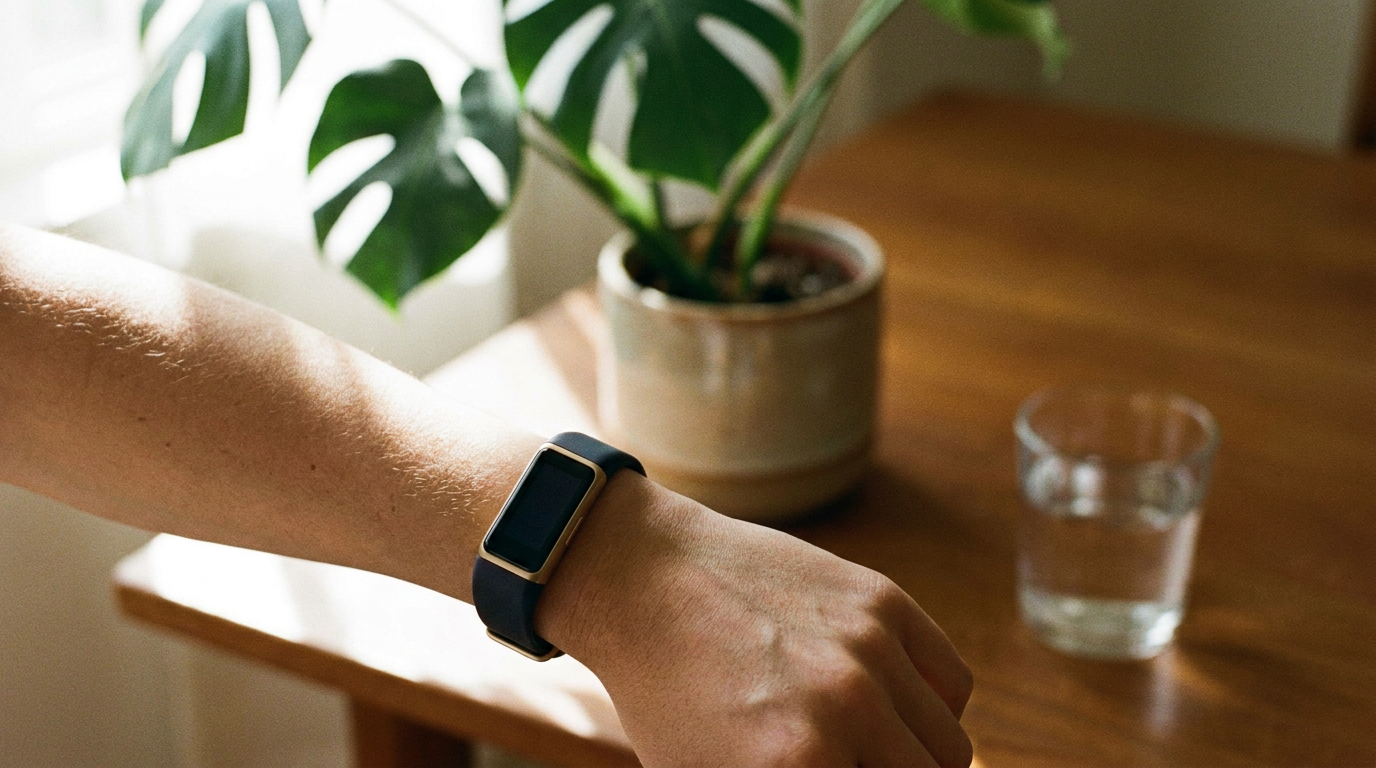
For years, your fitness tracker was little more than a glorified pedometer. It counted your steps, guessed at your calories, and maybe gave you a gold star for hitting 10,000. But the game has changed. As we enter 2026, the conversation around health technology has matured. We’ve shifted from mere tracking to active interpretation, using our devices as personal labs to decode the complex language of our own biology. This evolution is central to the growing field of **wearables for longevity**—not just living longer, but living healthier for longer.
The market is saturated with devices from Apple, Oura, WHOOP, and Garmin, each promising a clearer picture of your health. But with this flood of data—HRV, sleep latency, SpO2, skin temperature—comes a new kind of overwhelm. What numbers actually matter? Which metrics are noise, and which are signals that can guide meaningful action? The goal isn't to get a perfect score every day. It's to understand your own unique system well enough to nudge it, consistently and intelligently, toward a longer, more vibrant healthspan.
This guide answers the most pressing questions from a tech-savvy audience that has already moved past the basics. We’ll cut through the marketing and focus on the evidence-led metrics that offer the most significant leverage for improving your long-term health. Consider this your user manual for turning data into vitality.
§What is HRV and why does it actually matter for longevity?
Heart Rate Variability (HRV) measures the variation in time between each heartbeat. A high HRV is generally a sign your nervous system is balanced and adaptive, able to shift easily between a 'fight-or-flight' stress response and a 'rest-and-digest' recovery state. A low HRV suggests your body is under stress, whether from poor sleep, overtraining, illness, or psychological pressure.
For longevity, HRV is crucial because it provides a direct window into your autonomic nervous system (ANS), the body's control center. A well-functioning, high-HRV system is better at repairing cells, fighting inflammation, and managing metabolic processes—all cornerstones of a long healthspan. When you track your HRV trend, you aren't just seeing a number; you're seeing how your lifestyle choices (like a late-night meal, an evening workout, or a stressful workday) directly impact your body's ability to recover and thrive. A consistently declining HRV trend is a powerful early warning sign that your cumulative stress load is exceeding your capacity for recovery.
“We used to think of stress as purely psychological. HRV data makes it undeniable that our behaviors—what we eat, when we exercise, how we sleep—create a physiological reality. A high HRV isn't a score to achieve; it's the biological signature of a life lived in balance.”
§How can I actually improve my deep sleep score?
Focus on temperature, light, and timing. Your wearable provides the score, but improving it requires old-school behavioral changes. The single most impactful lever is lowering your core body temperate before and during sleep. Aim for a cool room (18-20°C or 65-68°F) and consider a warm bath or shower 90 minutes before bed, which paradoxically helps cool your core by drawing blood to the surface.
Light exposure is the second pillar. Get 10-15 minutes of direct morning sunlight as soon as possible after waking to set your circadian clock. Conversely, aggressively block blue light in the 2-3 hours before bed. This means using screen filters, dimming house lights, and avoiding overhead lighting. This light discipline signals to your brain that it's time to produce melatonin, the hormone that facilitates the transition into deep sleep.
A Pre-Sleep Protocol to Boost Deep Sleep
- 1
Step 1: The Wind Down (T-minus 90 Minutes)
Take a warm shower or bath. This helps lower your core body temperature which is a key signal for sleep. Dim all house lights and activate 'night mode' on all screens.
- 2
Step 2: Disconnect & De-stimulate (T-minus 60 Minutes)
Stop all work and put away stimulating screens. Avoid stressful conversations or content. Read a physical book, journal, or listen to calm music. This helps transition your brain from its active 'beta' state to a relaxed 'alpha' state.
- 3
Step 3: Cool The Environment (T-minus 15 Minutes)
Ensure your bedroom is cool, dark, and quiet. The ideal temperature for sleep is around 18°C (65°F). Check for any light pollution from chargers or streetlights and cover them.
Finally, consistency is paramount. Going to bed and waking up at the same time—even on weekends—anchors your circadian rhythm. Avoid large meals, intense exercise, and alcohol within three hours of bedtime, as all three can disrupt your body's ability to enter and maintain deep sleep. Use your wearable to run experiments: see how a 30-minute later dinner impacts your score. The data is your feedback loop.
§Is VO2 max really that important for longevity?
Yes, it's perhaps the single most potent longevity metric you can track. VO2 max measures the maximum amount of oxygen your body can utilize during intense exercise. Think of it as the horsepower of your aerobic engine. While many associate it with elite athletes, its real importance lies in its power as a predictor of all-cause mortality for everyone.
A high VO2 Max reflects the health of your entire cardiorespiratory system—your heart, lungs, blood vessels, and the efficiency of your mitochondria. As we age, VO2 max naturally declines. However, maintaining even an 'average' level for your age puts you in a significantly lower risk category for cardiovascular disease, cancer, and dementia. The data from major clinical studies is unequivocal: the fitter you are (as measured by VO2 max), the longer and healthier you are likely to live. Most wearables like the Apple Watch and Garmin provide a reliable estimate, making it an accessible metric to monitor over time.
§What are the most promising next-gen metrics for wearables?
Looking beyond the current big three (HRV, Sleep, VO2 Max), two key areas are emerging as critical for data-driven longevity: non-invasive glucose monitoring and circadian rhythm analysis via body temperature. As of 2026, continuous glucose monitors (CGMs) are becoming more mainstream for non-diabetics, allowing people to see in real-time how food, stress, and exercise affect their metabolic health. The goal is to minimize glucose variability and maintain stable energy levels, which is strongly linked to reduced inflammation and long-term health.
Furthermore, wearable tech is getting smarter about body temperature. Instead of just a single reading, devices like the Oura Ring track the subtle nightly fluctuations in your temperature. This data can reveal the precise timing of your circadian rhythm, or 'chronotype'. Understanding if you're a 'morning lark' or 'night owl' on a biological level allows for hyper-personalized recommendations. Aligning your sleep, meals, and workouts with your body's natural clock is a powerful, low-effort way to enhance every aspect of your physiology.
| Metric | What it Measures | Why it Matters for Longevity | How to Improve It |
|---|---|---|---|
| Heart Rate Variability (HRV) | Autonomic nervous system balance & resilience | Indicates your capacity to recover from stress | Meditation, breathwork, consistent sleep, limiting alcohol |
| Deep Sleep | Stage of sleep for physical repair & growth hormone release | Crucial for cellular cleanup (autophagy) and memory consolidation | Cool bedroom, blocking blue light, consistent bedtimes |
| VO2 Max | Maximum oxygen uptake during exercise | Strongest predictor of all-cause mortality; reflects cardiorespiratory health | Zone 2 cardio (150+ min/week), some high-intensity intervals (HIIT) |
| Resting Heart Rate (RHR) | Heart beats per minute at rest | A lower RHR generally indicates a more efficient heart and better cardiovascular fitness | Cardio exercise, stress management, maintaining a healthy weight |
| Glucose Variability | Fluctuations in blood sugar levels throughout the day | High variability is linked to inflammation, metabolic dysfunction, and aging | Pair carbs with fiber/protein, post-meal walks, prioritize sleep |
§How do I turn all this data into actual lifestyle changes?
The key is to move from passive tracking to active experimentation. Don't let the numbers paralyze you. Pick one metric you want to improve—for example, your average HRV—and one variable you will change for a set period. This is known as an 'N-of-1' experiment, where you are the sole subject.
For example, you could hypothesize: 'Meditating for 10 minutes every morning for two weeks will increase my average HRV.' Create a simple protocol. For 14 days, you will meditate at the same time each day and change nothing else about your routine. At the end of the two weeks, compare your average HRV to the two weeks prior. Did it go up? If so, you have direct evidence that this new habit is beneficial for your physiology. If not, the habit might not be for you, or it might need more time.
This structured approach transforms data from a source of anxiety into a tool for curiosity. It shifts the focus from achieving perfect scores to building a sustainable system of habits that are proven to work for *your* body. Start small, be consistent in your test, and let your own data guide you toward what truly moves the needle for your long-term health.
§Frequently asked questions
What is the most important metric on my Oura Ring or WHOOP for longevity?+
Can my Apple Watch accurately track VO2 Max?+
How long does it take to see improvements in my HRV?+
Is a continuous glucose monitor (CGM) worth it for someone without diabetes?+
What is Zone 2 cardio and how do I track it?+
Should I trust my 'readiness' score over how I actually feel?+
Sources & further reading
- Association of Cardiorespiratory Fitness With Long-term Mortality Among Adults Undergoing Exercise Treadmill Testing — JAMA Network Open (2018)
- Sleep and the Biorhythm of Fancy — Dr. Peter Attia (2023)
- Heart rate variability: a review — Indian Pacing and Electrophysiology Journal (2017)
- The emerging market of health-related wearables — McKinsey & Company (2024)
- Circadian Rhythms — National Institute of General Medical Sciences (NIGMS) (2022)
Featured Guides

How to Build a Strong Local Support Network After Moving to a New City
7 min read

7 Micro-Adventure Ideas for Busy Professionals to Break Routine and Reclaim Their Week
10 min read

Maya Hari's Quiet Confidence: Lessons from a Tech Leader's Rise
9 min read

Pomodoro vs Flow State: Structured Focus or Seamless Immersion?
9 min read